
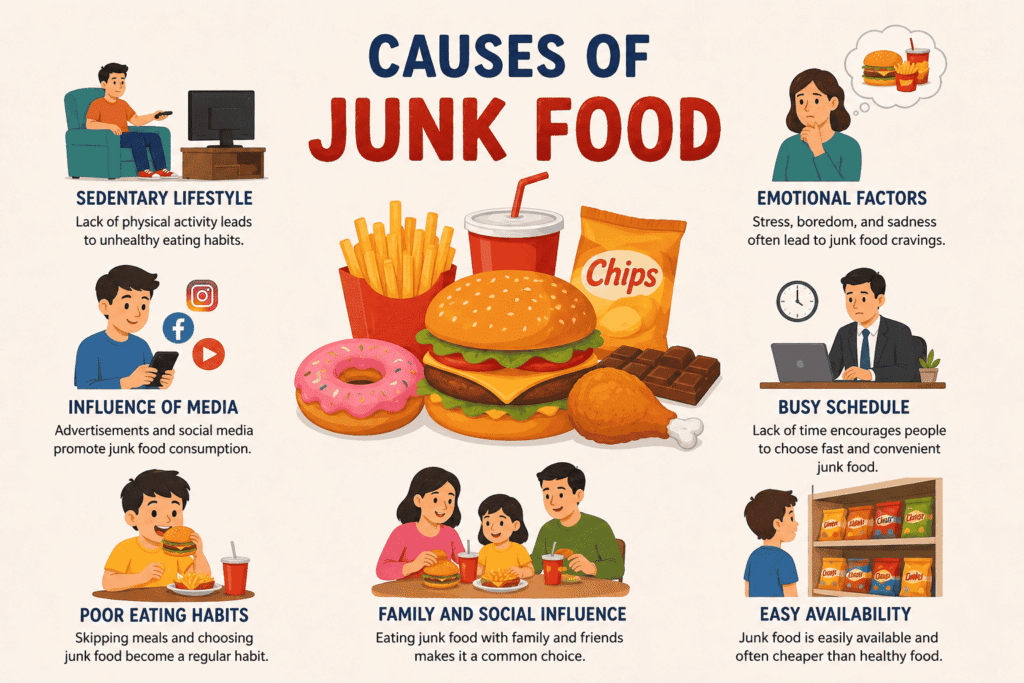
Junk food may taste good and save time, but eating it regularly can have serious effects on your health. Most junk foods are high in calories, unhealthy fats, sugar, and salt while being low in essential nutrients such as vitamins, minerals, and fiber. Over time, this can lead to several health problems.
1. Causes Weight Gain and Obesity
Junk food contains a large number of calories but provides very little nutrition. Frequent consumption can cause excess body fat, leading to overweight and obesity.
2. Increases the Risk of Heart Disease
Many fast foods contain unhealthy saturated and trans fats that can raise bad cholesterol (LDL) and increase the risk of heart disease and stroke.
3. Raises the Risk of Type 2 Diabetes
Sugary drinks, candies, and processed snacks can cause frequent spikes in blood sugar levels. Over time, this may increase the risk of developing type 2 diabetes.
4. Leads to High Blood Pressure
Most processed and fast foods are high in sodium (salt). Eating too much salt can raise blood pressure and increase the risk of heart and kidney problems.
5. Poor Digestion
Junk food usually contains very little fiber, which is essential for healthy digestion. A low-fiber diet can lead to constipation and other digestive issues.
6. Weakens the Immune System
A diet rich in junk food often lacks important vitamins and minerals that support the immune system, making the body more vulnerable to illness.
7. Reduces Energy Levels
Although junk food provides a quick burst of energy, it is often followed by a rapid drop in blood sugar, leaving you feeling tired and less productive.
8. Can Affect Mental Health
Research suggests that diets high in processed foods may be associated with a higher risk of anxiety, depression, and mood changes, although many factors influence mental health.
9. Increases the Risk of Tooth Decay
Sugary foods and drinks feed harmful bacteria in the mouth, which can damage tooth enamel and cause cavities.
10. Poor Nutritional Value
Junk food fills your stomach but does not provide the nutrients your body needs for healthy growth, strong bones, muscle repair, and overall well-being.
11. Skin Problems
Oily and sugary foods may contribute to acne, pimples, and dull skin.
Main Problems Caused by Junk Food
|
Problem |
Effect on Health |
|---|---|
|
Obesity |
Excess body weight |
|
High Blood Pressure |
Increased heart risk |
|
High Cholesterol |
Blocked arteries |
|
Diabetes |
High blood sugar levels |
|
Constipation |
Poor digestion |
|
Tooth Decay |
Damaged teeth |
|
Fatigue |
Low energy and weakness |
|
Acne |
Skin breakouts |
Conclusion
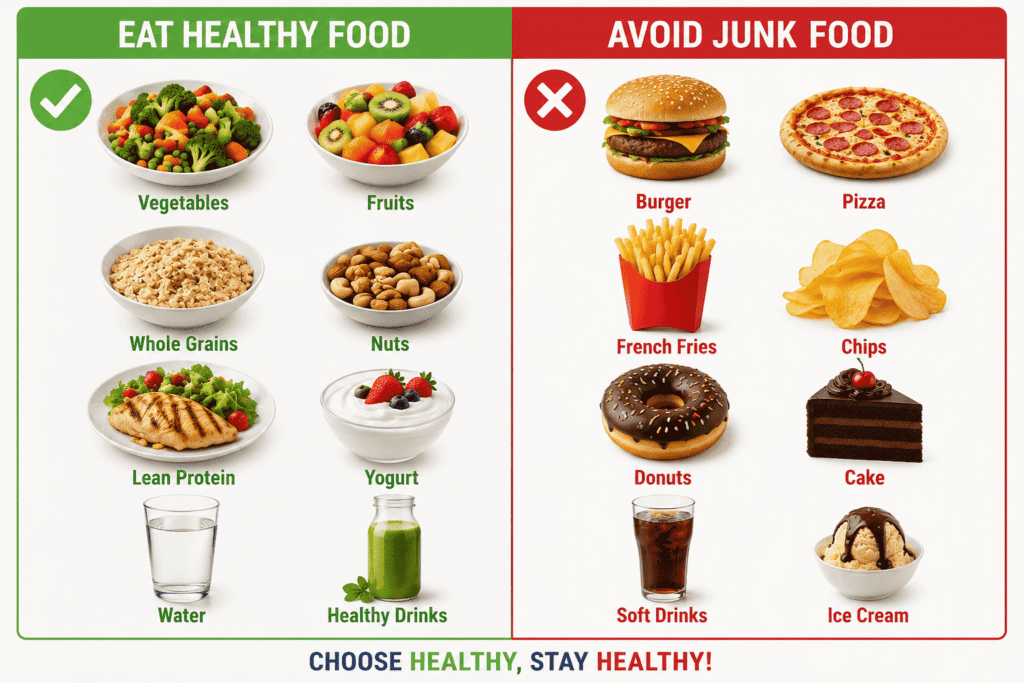
Eating junk food occasionally is unlikely to cause major harm, but making it a regular part of your diet can negatively affect both your physical and mental health. Replacing processed foods with fruits, vegetables, whole grains, lean proteins, and healthy fats is a simple way to improve your health, maintain a healthy weight, and reduce the risk of chronic diseases.
Frequently Asked Questions (FAQs)https://fitwithsaad.com/
1. What is junk food?
Junk food refers to foods and drinks that are high in calories, sugar, salt, and unhealthy fats but low in essential nutrients. Common examples include burgers, pizza, fries, chips, soft drinks, candies, and processed snacks.
2. Can I eat junk food and still stay healthy?
Yes. Eating junk food occasionally is generally fine if it is part of a balanced diet that includes fruits, vegetables, whole grains, lean proteins, and regular physical activity. Moderation is the key.
3. What are the best healthy alternatives to junk food?
Healthy alternatives include fresh fruits, vegetables, yogurt, nuts, homemade popcorn, whole-grain sandwiches, smoothies, grilled chicken, and baked sweet potatoes. These foods provide more nutrients while helping you stay full and energized.


Very good information bro