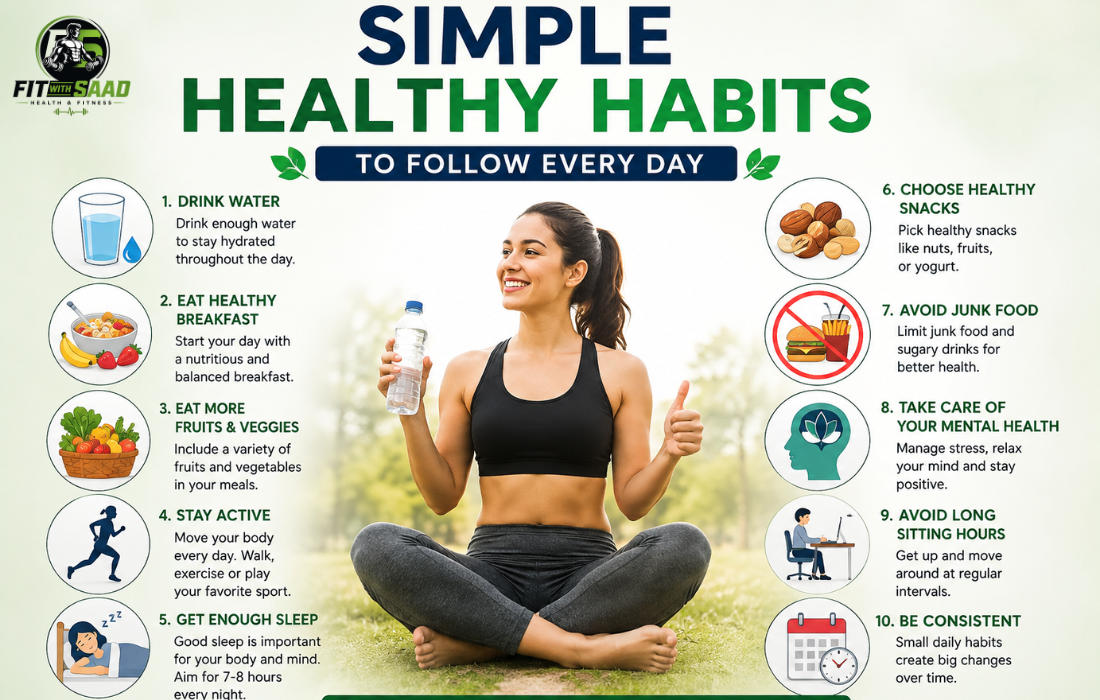
Living a healthy life does not always mean following a strict diet or spending hours in the gym. Small daily habits can make a big difference when you follow them regularly. The way you eat, sleep, move, drink water, and manage your daily routine can affect how you feel.
The good news is that you do not need to change everything at once. Start with a few simple habits and slowly make them part of your daily life. With time, these small steps can help you feel more active, focused, and healthy.
Table of Contents
Toggle1. Start Your Day With Water
After sleeping for several hours, your body needs fluids. Drinking a glass of water in the morning is a simple way to start your day. Keep a glass or bottle of water near your bed so it is easy to remember. You should also drink water throughout the day, especially when you are active or the weather is hot.
Simple tip: Keep a reusable water bottle with you and take small drinks regularly.
2. Eat a Healthy Breakfast
Breakfast can be a good opportunity to include nutritious foods in your day. Instead of choosing foods that are very high in added sugar, try options such as eggs, oats, fruit, yogurt, whole-grain bread, or nuts.
Remember: You do not need an expensive breakfast. Simple foods can also be healthy.
3. Add More Fruits and Vegetables
Fruits and vegetables provide important vitamins, minerals, and fiber. Try to include different types of fruits and vegetables in your meals.
Small change: Add one extra serving of fruit or vegetables to your day.
4. Move Your Body Every Day
You do not have to spend hours exercising to become more active. Walking, stretching, cycling, playing a sport, or doing a short home workout can all help you move more. If you sit for a long time, get up regularly and walk around for a few minutes.
Try this: Take a short walk after a meal or during a break from work or study.
5. Get Enough Sleep
Sleep is an important part of a healthy lifestyle. Your body and mind need enough rest to recover from the day. Try to keep a regular sleep schedule.
Also, reduce unnecessary screen time before bed and create a quiet, comfortable sleeping environment.
6. Reduce Junk Food
You do not need to completely avoid your favorite foods. However, eating too much fast food, sugary food, and highly processed snacks may make it harder to maintain a balanced diet. Try to make healthy foods your regular choice and enjoy less nutritious foods occasionally.
A simple rule: Focus on what you eat most of the time rather than trying to be perfect every day.
7. Take Care of Your Mental Well-Being
Being healthy is not only about your body. Your mental well-being also matters. Take a few minutes each day to relax, spend time with people you care about, enjoy a hobby, pray or meditate if that is meaningful to you, or simply take a break from a busy routine.
Give yourself time to rest. You do not have to be productive every minute of the day.
8. Limit Long Sitting Periods
Many people spend several hours sitting because of work, study, driving, or using phones and computers.
If you have a desk-based routine, try to stand up and move regularly. A few minutes of movement can be easier to manage than trying to exercise for a long period at the end of the day.
9. Make Time for Yourself
A healthy routine should be realistic. Give yourself time to enjoy activities that make you feel good and relaxed.
Read a book, go for a walk, listen to music, spend time with family, or enjoy a hobby. These simple activities can help make your daily routine more enjoyable.
10. Keep Your Healthy Habits Simple
One common mistake is trying to change everything overnight. A strict routine may be difficult to maintain, especially when you are busy.
Instead, choose two or three healthy habits and focus on them first. Once they become natural, add another habit.
For example:
- Week 1: Drink more water.
- Week 2: Add a daily walk.
- Week 3: Add more fruits and vegetables.
- Week 4: Improve your sleep routine.
11. Stay Consistent, Not Perfect
You may miss a workout, eat fast food, sleep late, or forget to drink enough water sometimes. That does not mean you have failed. The goal is to return to your healthy routine and keep going.
Consistency is more important than perfection. Healthy living is a long-term journey, not a one-day challenge.
Simple Healthy Habits: A Daily Example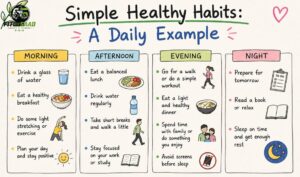
Here is an easy routine you can use as a starting point:
Morning:
Drink water, eat a balanced breakfast, and do some light stretching or walking.
Afternoon:
Choose a healthy lunch, drink water, and take short movement breaks if you work or study while sitting.
Evening:
Take a walk or do a simple workout. Eat a balanced dinner and spend some relaxing time away from unnecessary screen use.
Night:
Prepare for the next day and follow a regular bedtime routine.
Adjust it according to your lifestyle.
Conclusion
Following simple healthy habits every day can help you build a healthier lifestyle without making your routine complicated. Drinking enough water, eating nutritious foods, moving your body, getting enough sleep, and taking care of your mental well-being are small steps that can become powerful habits over time.
Start with one habit today. Once it becomes part of your routine, add another. The goal is not to become perfect overnight—it is to become a little healthier every day.
FAQs
1. What are the most important healthy habits?
Some important habits include eating a balanced diet, staying active, drinking enough water, getting enough sleep, and taking care of your mental well-being.
2. How can I start a healthy lifestyle?
Start with small changes. Drink more water, add nutritious foods to your meals, walk regularly, improve your sleep routine, and slowly build better habits.
3. Do I need to exercise every day?
Not necessarily. Your activity plan should match your fitness level and goals. Regular movement is important, while rest days can also be useful.
4. How long does it take to build a healthy habit?
There is no exact number of days that works for everyone. The important thing is to repeat the habit regularly and make it realistic enough to maintain.